





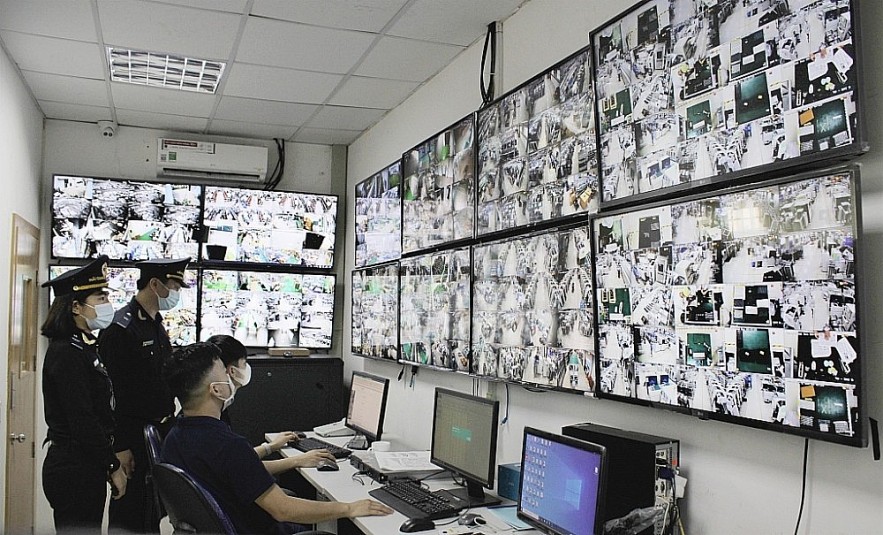
An EPE Customs camera system is not simply a collection of cameras. It is a controlled surveillance, storage and access environment that allows an export processing enterprise to document the movement of vehicles and goods and, when required, provide the supervising Customs authority with usable evidence.
This guide localizes the main implementation points from the Vietnamese source article and the Decision 247/QĐ-TCHQ framework. It is an operational checklist, not legal advice. Before procurement or acceptance, confirm the latest requirements with the Customs unit managing your enterprise.
What an EPE Customs camera system must achieve
The design should support three outcomes: continuous observation of critical areas, sufficient recording retention, and controlled access to footage. These outcomes must work together. A high-resolution camera is of little value if its view is blocked, recordings are overwritten too early, or authorized users cannot retrieve footage at the requested time.
The enterprise remains responsible for selecting, operating and maintaining its own equipment and transmission infrastructure. A practical project therefore begins with a site survey, a camera-position drawing, a storage calculation and an agreed access method—not with a device quotation alone.
Core technical requirements to review
| Area | Implementation check | Evidence to retain |
|---|---|---|
| Camera view | Cover gates, warehouse access and storage areas without critical blind spots. | Numbered layout and sample images. |
| Image quality | Use resolution, lens and lighting suitable for the scene; verify vehicle or container identifiers at gates. | Day/night test captures. |
| Storage | Calculate usable capacity for at least 12 months under the approved recording profile, including redundancy and reserve space. | Capacity worksheet and retention test. |
| Remote access | Provide a secure, documented method with least-privilege accounts and access logging. | Account handover and connection test. |
| Continuity | Monitor device, storage, power and network health; define notification and recovery procedures. | Maintenance and incident logs. |
A detailed Customs and EPE camera installation plan should turn each requirement into a measurable acceptance item. Avoid relying only on catalogue specifications: test the installed system under the lighting, traffic and network conditions of the actual site.
Camera locations that normally need coverage
The final position list depends on the enterprise layout and the supervising authority’s instructions. The common baseline includes:
- Main vehicle and personnel entrance and exit points.
- Entrances to raw-material, supplies, semi-finished and finished-goods warehouses.
- Scrap and waste storage entrances, where applicable.
- Open storage yards and cargo holding areas.
- Interior warehouse views that show goods moving in and out and provide useful overall coverage.
- Other tax-suspension or Customs-supervised storage areas identified during the survey.
At vehicle gates, the camera angle, shutter behaviour, lighting and lane discipline must work as one system. Test with real vehicles moving in both directions; a static daytime snapshot does not prove that number plates or container numbers will remain readable during operation.
Storage, retrieval and secure remote access
The original requirement set used for this article specifies local retention for at least 12 months. The storage design should account for camera count, resolution, frame rate, codec, recording schedule, expected scene activity, RAID or other redundancy, and a practical safety margin. Confirm capacity using measured bitrates after commissioning.
For larger sites, separate recording, archive and backup functions where appropriate. The storage and connectivity infrastructure should also be monitored for disk faults, time synchronization, power loss, network interruption and recording gaps.
Remote access must be controlled. Create named accounts with only the permissions required for viewing and playback, protect transmission, restrict source networks where practical, and keep access logs. Do not share the system administrator account as the normal viewing credential.
What to do when cameras or connectivity fail
An incident procedure should be ready before the system goes live. When a camera, recorder, storage array, power supply or connection fails, record the start time, affected locations and observed symptoms; notify the responsible internal team and the supervising Customs unit as required; then preserve the remaining recordings and begin remediation.
The source framework distinguishes equipment incidents from transmission interruptions and sets response expectations. Because the applicable instruction may change or be supplemented locally, use the current written guidance provided to your enterprise. Where gate observation is interrupted, prepare the manual vehicle-control record required by the supervising unit until camera coverage is restored.
Pre-acceptance checklist for the enterprise
- Approve a numbered drawing that links every camera name to its physical position.
- Test daytime, nighttime and backlit scenes using real operating conditions.
- Verify playback for randomly selected dates and confirm the oldest available recording.
- Measure actual storage consumption and compare it with the 12-month capacity model.
- Test secure access from the agreed external network using the handover account.
- Check device time, NTP synchronization, user permissions and audit logs.
- Simulate a camera, disk, power and network failure and record the recovery workflow.
- Prepare the layout, equipment list, account handover, test results and incident contacts.
Start with the site and the supervising Customs unit
No generic bill of materials can replace a site-specific survey. Confirm the supervised areas and access expectations first, then size cameras, network, power and storage around the approved operating scenario. This reduces rework and gives the acceptance team evidence that each requirement has been tested.
Nhật Thực can review the site plan, existing equipment, retention target and connection method before preparing a technical proposal. The enterprise should still obtain final confirmation from its supervising Customs authority before implementation.